

Foundations Should Examine Practices That Prevent Them form Giving Grantees More Power
Good food for thought. Here is an opinion piece in the Chronicle of Philanthropy by Renee Karibi-Whyte of Rockefeller Philanthropy Advisors relating to racial injustice and systemic inequalities. While these topics are front and forward in many of today’s conversations her question to the philanthropic world is what changes are you making within your own practices based on these conversations?
Karibi-Whyte offers three things to challenge us to think differently.
Photo credit: Євгенія Височина @eugenivy_reserv
Good food for thought. Here is an opinion piece in the Chronicle of Philanthropy by Renee Karibi-Whyte of Rockefeller Philanthropy Advisors relating to racial injustice and systemic inequalities. While these topics are front and forward in many of today’s conversations her question to the philanthropic world is what changes are you making within your own practices based on these conversations?
Here are three things Karibi-Whyte put forward to challenge us to think differently.
Step outside of the bubble. Understand who we interact with - does that include people whose perspectives and life experiences are different from our own? What assumptions do we make of what communities should do? How do our own personal experiences create biases in our analysis and evaluation of information?
Reconsider outdated and potentially harmful organizational practices. Are grant requirements, reporting, etc. shutting out communities you want to reach? Is there adequate diversity within your internal leadership and with grantees?
Stick around when times get tough. Recognize and then mitigate power dynamics and processes that prevent honest feedback and two-way conversations.
What are your thoughts? What are your actions?
Photo credit: Євгенія Височина @eugenivy_reserv

Pivot - 8,000 Law School Graduates & the Bar Exam on Hold
What to do if you graduated from law school in California only to learn the state’s summer bar exam is suspended due to the coronavirus? What to do with a growing demand for low-cost legal services within the state? You pivot.
Within 13 days the Legal Services Funders Network, developed and launched its first collaborative funding project: a Post Graduate Law Fellows Program.
June 24, 2020 blog post on Exponent Philanthropy by Claire Solot. How We Catalyzed a Fellows Program to Meet Legal Services Needs During COVID-19.
What to do if you graduated from law school in California only to learn the state’s summer bar exam is suspended due to the coronavirus? What to do with a growing demand for low-cost legal services within the state? You pivot.
Enter the Legal Services Funders Network, a network of funders in the Bay area of California who fund civil legal services organizations as a strategy to eliminate poverty. Within just 13 days the network developed and launched its first collaborative funding project: a Post Graduate Law Fellows Program.
Through the program recent law school graduates provide 15-20 hours of work weekly for 7 months within Legal Service Organizations in the Bay area. Cases these organizations take on revolve around unemployment issues, employees working in high risk environments or conditions, eviction, clients dealing with fraud, those seeking benefits or access to healthcare, and those dealing with discrimination.
The program is a win-win in that it expands the number of clients served by the legal service organizations and the new graduates receive a first-hand look at issues impacting those most in need. The fellows receive a stipend have time to prepare for the next California Bar Exam.
As of June 1 the program placed 30 fellows (graduates from four area law schools). Each sponsorship is $18,000 with $15,000 dedicated to the stipend with $3,000 for the legal service organization.
For more, read the June 24, 2020 blog post on Exponent Philanthropy written by Claire Solot. How We Catalyzed a Fellows Program to Meet Legal Services Needs During COVID-19.
Pivot - Reinterpreting the Millermore House
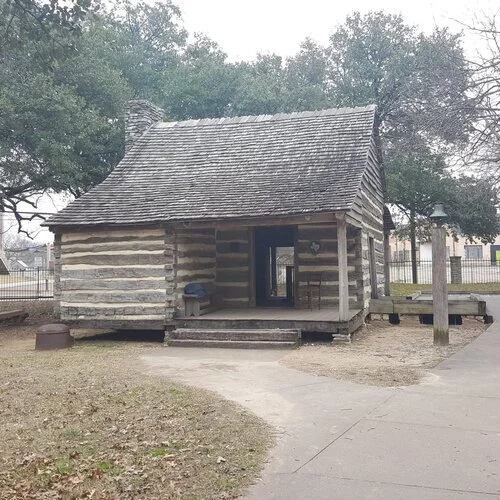
Prior to the coronavirus and prior to recent conversations around social justice, Dallas Heritage Village embarked on a project to reinterpret the Millermore House with the intent of telling stories about all people who lived and worked in the Millermore house, including the enslaved.
What is the pivot? Last year, the Village staff revisited historical documentation and archives relating to the Millermore house and its occupants including the 1860 census which stated then owner, William Brown Miller, enslaved 16 African Americans and included names of three couples. Then began the task of identifying the enslaved and those who lived in the cabin and landing on stories the Village will tell.
Prior to the coronavirus and prior to recent conversations around social justice, Dallas Heritage Village embarked on a project to reinterpret the Millermore House with the intent of telling stories about all people who lived and worked in the Millermore house, including the enslaved.
Why the Millermore house? It is the linchpin of what today is known as Dallas Heritage Village, a history museum that represents life in Dallas from 1840-1910. The house was the first of 21 structures moved to land located in the Cedars neighborhood just south of IH 30. This land was Dallas’ first city park, opened in 1876 and was once home to the city’s first zoo.
What is the pivot? Last year, the Village staff revisited historical documentation and archives relating to the Millermore house and its occupants including the 1860 census which stated then owner, William Brown Miller, enslaved 16 African Americans and included names of three couples. Then began the task of identifying the enslaved and those who lived in the cabin and landing on stories the Village will tell.
Enter the Slave Dwelling Project, founded by Joe McGill. Joe’s mission is to bring to life stories of enslaved people in America by inviting people to sleep in historic sites where the enslaved lived. McGill talks about life in the dwelling from the perspective of the enslaved and reminds listeners that like us, the enslaved were smart, strong, talented, and skilled individuals. For the last two years, Joe brought his knowledge and overnight narratives to Dallas Heritage Village and its staff and visitors.
For years the Village focused its interpretation of Millermore to stories about its original occupant, William Brown Miller. Today, that view has expanded. Tours begin in the Miller cabin which was the original home for the Miller family when they arrived in Dallas in 1847. For seven years Mr. Miller and his slaves built the adjacent home, now known as Millermore. In 1862 the Miller family moved into the “big house” while the enslaved and their families occupied the cabin.
After emancipation, the cabin was home to several workers and through their research, the Village learned a descendent of the enslaved lived in the cabin until as late as 1940. Melissa Prycer, executive director of Dallas Heritage Village noted, “It (Miller cabin) was home for African Americans far longer than it was a home for pioneers.”
While COVID-19 has put a halt on touring homes and buildings at Dallas Heritage Village, guests are invited to walk the grounds, enjoy a picnic lunch, and participate in activities offered in open spaces. Since re-opening their gates to visitors in June, the Village has hosted fiber weaving demonstrations, cooking demonstrations, and stories celebrating June 19th. Future activities include Old Time Music jams, talks on old-time firearms, more.
For updates and additional information, follow Dallas Heritage Village on Facebook and Instagram. Be sure to put Dallas Heritage Village on your must do list for a taste of what Texas was like in the past. I’ll see you around the Village!

Pivot - Raising up Nonprofits Operating in Communities of Color
What is a side benefit of COVID-19? A recognition of systemic inequalities among communities of color particularly as it relates to access to food, healthcare, and health outcomes. What is the pivot? Raising up nonprofit organizations in these communities that until now have gone largely unnoticed by philanthropy.
For more, click here for a June 18, 2020 article on FWD>DFW, a forum that connects companies, causes, and communities to the short- and long-term economic advancement of North Texas.
Image by Omar Flores @omarg247.
What is a side benefit of COVID-19? A recognition of systemic inequalities among communities of color particularly as it relates to access to food, healthcare, and health outcomes. What is the pivot? Raising up nonprofit organizations in these communities that until now have gone largely unnoticed by philanthropy.
Enter North Texas Cares, a funder collaborative among North Texas foundations and United Ways to provide emergency dollars to agencies addressing issues surrounding COVID-19.
Organizers of North Texas Cares noted the coronavirus’ disproportionate impact on communities of color and took a bit of an out of the box approach to its funding. Agencies eligible to apply include those offering direct services in response to COVID-19 along with organizations addressing racism as it relates to the pandemic and those addressing racial disparities in communities of color regarding food insecurity, access to care, and health disparities.
Through efforts of Dr. Frowsa Booker-Drew, Kimberly O’Neil, and others websites have been formed including ServeDFW and Serve South Dallas to promote the work of agencies within these neighborhoods that otherwise might fly under the philanthropic radar.
And the movement doesn't stop with the short-term needs surrounding the coronavirus. Enter Power In Action, a new platform and space for individuals and groups to come together, share dialog, share experiences, and lift up existing networks of people of color led businesses and nonprofits working within these neighborhoods.
This post recognizes a pivot within the North Texas philanthropic community and its nascent steps to acknowledging and giving a voice to the long-time systemic inequities that loom large in our own backyards.
For more, click here for a June 18, 2020 article on FWD>DFW, a forum that connects companies, causes, and communities to the short- and long-term economic advancement of North Texas.
Image by Omar Flores @omarg247.

Pivot - Volunteers
You have worked hard to build a following of loyal volunteers. What do you do when a pandemic prevents these people from carrying out their work? You pivot. Have you thought about shifting their roles to a virtual setting?
What are your ideas for “Covid-conscious” volunteering?
You have worked hard to build a following of loyal volunteers. What do you do when a pandemic prevents these people from carrying out their work? You pivot. Have you thought about shifting their roles to a virtual setting?
How about entrusting volunteers to organize a virtual 5k race? Take part in a drive-by food drive? Or read to students via an online platform?
Click for a May 27 article in the Chronicle of Philanthropy that showcase how four nonprofits adapted their volunteer programs in the coronavirus era.
What are your ideas for “Covid-conscious” volunteering?

Pivot - Performing Arts Organizations
What do you do when a global pandemic triggers shelter in place orders and prevents gatherings of any size? You pivot. Nonprofits are resilient and performing arts groups are no different. This post contains just a few examples of creative groups showing their inventive sides in response to COVID-19.
Photo by Rob Laughter @roblaughter.
What do you do when a global pandemic triggers shelter in place orders and prevents gatherings of any size? You pivot. Your season may be canceled but thank goodness for the internet and the ability to stay connected with patrons and donors through virtual formats.
Here are a few examples of arts organizations that have done just that.
Click for a May 10 editorial piece in the Dallas Morning News by Emily Levin, principal harpist for the Dallas Symphony Orchestra. Emily wrote to her colleagues asking their interest in putting together a virtual orchestra performance. The rest, as they say, is history. YouTube link to Ravel’s Le Jardin Féerique (The Fairy Garden) performed by 23 members of the Dallas Symphony Orchestra.
Turtle Creek Chorale’s season was cut short due to the coronavirus but that didn’t stop the group from debuting “Why We Sing” in conjunction with the May 5 North Texas Giving Tuesday Now campaign. The video is a strong reminder of the beauty of Turtle Creek Chorale’s voices at a time when many folks are struggling to find their footing. YouTube link to “Why We Sing.”
Click for a May 27 feature in Arts & Seek on AT&TPAC@Home series that brings the arts to your house. Content is presented on the AT&TPAC@homeYouTube channel and includes free arts education programs for high schools and Disney Musical in Schools that teaches musical theater to elementary students. There are drawing and dance classes, conversations with artists, and behind the scenes looks at all that happens backstage during performances.
PLAY- PERVIEW is a live-streaming theatre initiative that presents one-time only, live-streamed shows and readings into people’s homes. Viewers purchase tickets to these Broadway, Off Broadway, and Off Off Broadway shows. Proceeds from the ticket sales are directed to arts organizations impacted by COVID-19.
These are but a few examples of performing arts groups that are showing their creative sides in new and inventive ways. What would you add?
Photo by Rob Laughter @roblaughter.